Told a Casket Is Protective? What the Gasket, the Warranty and the Rule Actually Say
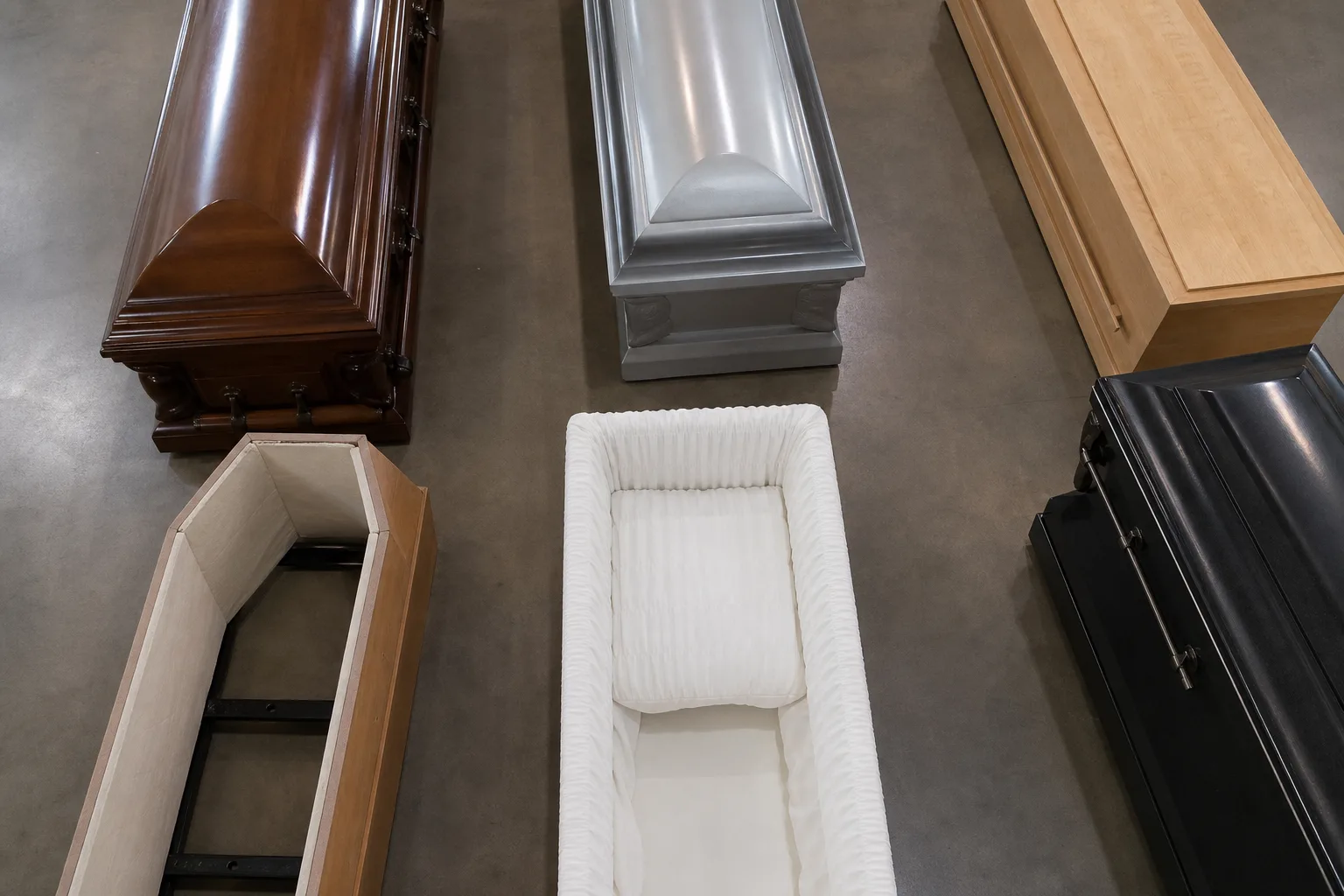
Gauge runs backward. Steel casket thickness is measured in gauge, and lower numbers mean thicker metal, so 16 gauge is heavier stock than 20 gauge. Price generally tracks that thickness.
Wood cannot be gasketed. Wood swells and shrinks with moisture and will not hold a compression seal, so hardwood caskets are sold without any sealing hardware. Their price reflects species, joinery and finish instead.
Non-ferrous shells. Copper and bronze caskets are priced by the weight of metal per square foot rather than by gauge, and they resist corrosion better than painted carbon steel. Stainless steel sits between the two on both counts.
| Item | What it means |
|---|---|
| The word preserving | Federal trade regulation of funeral goods bars sellers from claiming a casket or sealing device will preserve remains for a long or indefinite period. That is why sales language uses protective or sealing instead. |
| Ask for it in writing | If a salesperson makes a preservation claim out loud, ask to have it stated in the written contract. The response tells you how confident the firm is in the claim. |
| What the warranty covers | Most casket warranties promise freedom from defects in materials and workmanship for a stated number of years, plus resistance to the entry of air and water under normal conditions. Neither promise concerns the condition of remains. |
On a funeral home price list, two versions of the same casket often sit a few hundred dollars apart, and the difference is a strip of rubber and a threaded rod. The upgraded model is described as protective, or sealing, or gasketed. Nobody at the arrangement conference is likely to explain what that hardware does once the lid comes down and the casket goes into the ground, partly because the honest answer is narrower than the word protective suggests. It is worth knowing before you agree, because the decision is expensive and cannot be revisited.
The gasket and the locking bar, mechanically
A gasketed casket has a continuous rubber or synthetic strip set into a channel along the top edge of the shell, running the full perimeter. When the lid closes, a crank at the foot end turns a threaded rod connected to a bar inside the rim, and that bar draws the lid down onto the gasket, compressing it. The result is a mechanically tight joint between two pieces of metal. That is the whole mechanism. It resists the entry of water and soil for as long as the gasket stays resilient and the shell around it holds its shape, and both of those depend on conditions nobody can inspect afterward.
What steel gauge and wood actually mean underground
Steel caskets are sold by gauge, which measures thickness, and the numbering runs backward: 16 gauge steel is thicker than 18 gauge, which is thicker than 20. Thicker steel costs more, weighs more, and holds a compressive load longer before it deforms. Stainless steel and copper or bronze resist corrosion better than painted carbon steel, which is why they carry higher prices. Wood caskets are not gasketed at all, since wood moves with moisture and will not hold a compression seal, so a solid mahogany or walnut casket is bought for its material and joinery rather than for any barrier claim. Soil chemistry, drainage, and depth all vary by cemetery and by section within a cemetery.
What a seller is allowed to tell you
The Federal Trade Commission is responsible for the trade rule governing funeral goods and services, and among its provisions is a prohibition on telling a customer that a casket, a sealing device, or any other item will preserve remains for a long or indefinite time. That is why careful funeral directors say protective or sealing rather than preserving, and why an itemized price list will describe a gasket as resisting the entry of air and water rather than doing anything to the body inside. If a salesperson goes further verbally, ask for the claim in writing. The answer to that request is informative on its own, and a good firm will simply explain the limit.
Reading the warranty the manufacturer does give
Caskets do carry written warranties, and they are worth reading line by line, because they warrant something specific and it is not what buyers assume. Typical language covers the casket against defects in materials and workmanship for a stated term, often measured in decades, and separately warrants that the sealing mechanism will resist the entry of air and water under normal conditions. Look for what triggers the remedy, which is usually a defect discovered on disinterment, and look for the remedy itself, which is generally replacement of the casket rather than money back. Note the exclusions: acts of nature, ground conditions, flooding, disinterment not performed by authorized parties, and damage after delivery.
What a careful reader checks before signing
Compare the gasketed and non-gasketed versions of the same model on the price list and write down the dollar difference, since that is the actual cost of the feature rather than the cost of the casket. Ask which gauge and which metal, and ask whether the price includes the same interior. Ask the cemetery whether an outer burial container is required and which type, because a concrete vault carries its own separate warranty and does most of the work of supporting the grave surface. Then read both warranties together and decide what the combined promise is worth to you. Some buyers find real value in a sealed casket, and that judgment is a reasonable one to make on plain information.
A gasket is a piece of engineering with a defined job, and it does that job honestly. The confusion comes from language layered on top of it at the point of sale. Ask what the hardware does, read the warranty term and its exclusions, and the price difference becomes a choice you can make deliberately rather than under pressure.